

The Moment Life Divides Into Before and After
For years, I’ve been on the other end of the phone—listening to families navigate aging, decline, and life-altering diagnoses. I’ve been the steady voice in moments of fear, the listener when families didn’t yet have words for what they were experiencing.
Today, I am writing from the inside of that experience.
This three-part series is a personal reflection on what happens when cancer enters your family—how it changes everything, how caregiving begins quietly, and how families are left to navigate a complex healthcare system while life continues all around them.
Series Post List
- Part 1: The Moment Everything Changes: When “It Might Be Cancer” Becomes Real
- Part 2: Everyone Has an Opinion. You’re the One Doing the Care.
- Part 3: Life Doesn’t Pause for Cancer: Navigating Work, Family, and a Broken System
The Moment Everything Changes: When “It Might Be Cancer” Becomes Real
There is a moment—quiet, unremarkable on the outside—when everything you thought your life was built on shifts.

It doesn’t arrive with drama.
It doesn’t announce itself loudly.
It often comes in a pause, a look, or a carefully chosen phrase.
For my husband and I, it came when “we need to run a few more tests” stopped sounding routine and started sounding more final.
I’ve spent more than five years on the phone with families navigating aging, decline, falls, and terminal diagnoses. I’ve been the calm voice when someone else couldn’t find theirs. I’ve listened as adult children cried in their cars, or behind closed office doors—trying to hold it together long enough to make one more decision.
And then, suddenly, I was no longer the one listening. I was the one sitting beside my parent, trying to read the doctor’s face. I was the one calculating what not to ask out loud. I was the one nodding while my chest tightened.
That’s the moment when life quietly divides into before and after.
When Knowledge Doesn’t Protect You
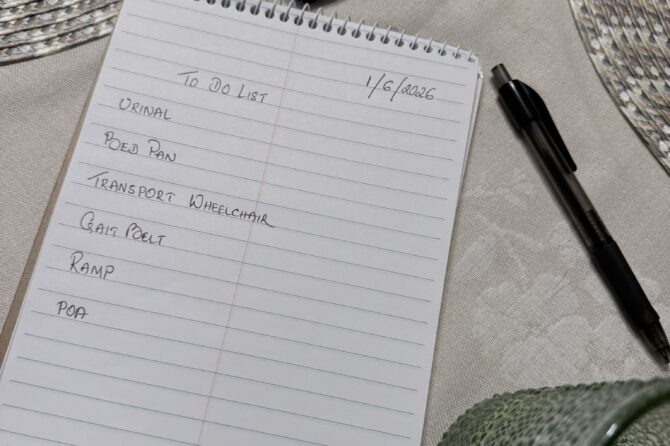
There is a strange irony in knowing too much.
I understood the language.
I recognized the process.
I knew what the next steps might look like.
And still—nothing prepares you for how personal it becomes when the patient is your parent.
Professionally, I’ve told families that shock is normal. That fear comes in waves. That it’s okay to feel unsteady. Sitting on the other side of the table, I felt all of that at once—and more. I felt the instinct to go into “professional mode,” to stay composed, to ask the right questions. I also felt like a child again, wanting someone else to take the lead.
Both versions of me showed up. Neither felt fully adequate.
The Moment You Start Protecting Everyone

What no one really talks about is how quickly you begin managing emotions—yours, your parent’s, your spouse and everyone else’s.
You watch your words. You soften your tone. You measure how much truth to share and when. You are suddenly holding information that feels heavy, fragile, and dangerous all at once. You don’t want to scare your parent. You don’t want to alarm your family. You don’t even want to say the word out loud yet—because once you do, it becomes real.
So you carry it quietly. This is the part families don’t prepare you for: The emotional labor starts immediately.
Seeing My Work Through New Eyes

For years, I’ve heard families say, “I don’t even know where to begin.” I thought I understood what they meant. Now I know they weren’t talking about logistics. They were talking about the moment when the ground drops just enough to make you unsure of your footing.
They were talking about the realization that life doesn’t stop while you catch your breath. That decisions keep coming even when you’re not ready. That being “strong” often just means showing up again tomorrow.
Why This Moment Matters More Than We Realize
This experience has changed the way I understand the families who reach out to us at Assured Quality Homecare.
I used to hear their fear, their exhaustion, their uncertainty—and respond with professionalism, reassurance, and resources. Now, I understand the deeper layer beneath those conversations. The part where families aren’t just looking for services—they’re looking for steadiness. For someone who understands what it feels like when everything suddenly becomes fragile.
This moment—the moment when “it might be cancer” becomes real—is often when families begin carrying far more than anyone can see. It’s when questions outnumber answers. When strength is assumed but support is desperately needed.
At ASQ, we’ve always believed that care is about more than tasks. It’s about presence, guidance, and walking alongside families when life becomes overwhelming. Standing on the other side of this experience has only deepened that belief.
If you are in this place right now, know this: you don’t need to have everything figured out. You don’t need to be strong all the time. And you don’t have to navigate what comes next alone.
This is only the beginning of the story—and sometimes, the most important thing at the start is knowing there is someone ready to walk with you.
Support & Trusted Resources
If you’re navigating a new diagnosis, the following organizations offer reliable information and support:
What Comes Next
The moment you hear the words “it might be cancer,” life changes instantly. What follows is quieter and more complicated—roles shift, expectations form, and caregiving begins long before anyone names it.
In Part 2, I’ll share what happens when love turns into responsibility, and how family dynamics shape the caregiving experience.